EPISODE
56
Season 2, Episode 17: 12 Part Series - The Creative Process - Storyboarding
EPISODE LINKS.
SHOW NOTES.
McFarland Minutes: Storyboarding in the 12-Step Creative Process
Natalie McFarland introduces McFarland Minutes and resumes the show’s 12-step creative process for successful video production, moving into the storyboarding phase after problem definition, ideation, goals, and strategy. With Ryan, she frames storyboarding as the fun, imaginative stage that turns prior research into a memorable narrative, noting people are 22 times more likely to remember concepts presented as a story than as stats. They discuss tailoring storyboards to audience and format (from short social ads to short films), factoring in setting details like wardrobe, and building from subjects and locations, mood boards, and a strong establishing shot. They outline adding ambience, music style, color/grade considerations, and narration/voice choices to convey tone, and close by previewing June’s episode on logistics and contingency planning when plans go off the rails.
00:00 Show Intro and Format
00:34 12 Step Process Returns
01:38 Why Storyboarding Matters
03:03 Narrative Beats Stats
04:26 Audience and Setting Details
06:50 Team Storyboarding Workflow
08:42 Mood Boards and Feel
11:59 Establishing Shot Hook
14:59 Building the Story in Shots
17:13 Sound Design and Nike Example
20:28 Ambience Shapes Story
21:30 Hidden Sounds and Confusion
23:01 Choosing Music Style
23:47 Mood Boards for Music
26:03 What Color Is the Song
29:31 Color and Ambience Matching
30:23 Narration and Voice Choice
33:01 Tone and Texting Analogy
35:02 Human Nuance in VO
38:45 Planning for Logistics Next
ABOUT THIS EPISODE.
Mastering the Art of Storyboarding in Video Production
Introduction
Welcome to another insightful edition of McFarland Minutes! If you’re new here, I’m Natalie McFarland, founder and president of McFarland Productions and director at Off Your Rocker Films. In this blog, we’re diving deep into Step 5 of our 12-step creative process—Storyboarding. This step is crucial for transforming all your research and ideas into a cohesive and compelling narrative.
The Fun Part of Storyboarding
Storyboarding is undeniably one of the most exciting phases of the creative process. It’s where we get to dream and imagine the endless possibilities of our project. Ryan and I both agree that it’s a time to let your creativity run wild, limited only by your imagination (and maybe a bit by your equipment). This is the stage where we take all the groundwork laid out in previous steps—problem identification, ideation, goal determination, and strategy—and bring them to life through a narrative that resonates with your audience.
The Importance of Narrative
Statistics show that people are 22 times more likely to remember a story rather than just facts and figures. This is where storyboarding comes into play. It allows you to convert those dry statistics and technical details into an engaging story, making it relatable and memorable for your audience. Whether it’s a 15-second Instagram ad or a feature-length film, the narrative remains imperative to creating a lasting impact.
Crafting Relatable Stories
Successful storyboarding is about crafting a narrative that your audience can relate to. Even a simple setting like someone talking in their car can convey a potent narrative to the right audience. The setting, wardrobe, and even the smallest details contribute to the storyline and help establish a connection with viewers. It’s fascinating how varied storyboarding can be, with each project requiring its own unique approach to engage its target audience effectively.
The Process of Storyboarding
When we storyboard, we gather as a team with a clear understanding of the project. Step one involves creating a mood board—a collection of inspirations that convey the desired look, feel, sound, and mood of the project. The goal is to capture the emotional essence we want to communicate, whether it’s excitement, serenity, or adventure.
The establishing shot is crucial—it sets the tone for the entire project. A powerful opening shot can leave a lasting impression, sometimes even more so than the final shot. We aim to convey the intended emotion effectively, as it can significantly impact the viewer’s perception.
Envisioning the Story
Once we’ve gathered our visuals, we draft a timeline detailing what we’ll see on screen and for how long. Next, we focus on ambiance—what sounds will accompany each scene? Is it the rustle of leaves, distant traffic, or complete silence? The right ambient sounds can enhance your narrative and make it more immersive.
Music and Narration
Music selection is another key element. The right track injects emotion, enhances storytelling, and creates an environment for your narrative to thrive. Similarly, narration plays a vital role. The voice you choose and its delivery can profoundly affect the tone and perception of your project. It’s essential to match the voice to the mood and message you want to convey.
Conclusion
As we conclude the storyboarding step, it’s important to remember that things don’t always go as planned. The ability to adapt and have backup plans is crucial. In upcoming episodes, we’ll discuss logistics and how to manage the unexpected when you’re on site. Thank you for joining us on this journey through the creative process. Stay tuned for next month’s exploration into the logistical aspects of video production. Your creative endeavors await!
IN THIS EPISODE.

Ryan Lee
Creative Content Manager, McFarland Productions
Starting as the Intern in 2023, Ryan is now the Post-Production Editor and has joined the team full time. His creativity and organization play a crucial role in quickly creating unique content all across the board, however with a core focus on video production. Ryan grew up in Gladstone, OR, where he spent time playing sports, on the water, and in the mountains. He attended Oregon State University where he got his Bachelors Degree in Digital Communication Arts. Although Oregon will always be his home, he spent previous years in Tennessee, and now lives in Connecticut. In his free time he enjoys cooking just as much as eating, and if you can do both outside, all is good in the world.
After spending time filming and editing countless events, sports, adventures and more, Ryan’s main action in the company is to organize, edit, and export content. Whether it’s 30 minutes and horizontal or 30 seconds and vertical, moving or still, he’ll take care of it.
ABOUT YOUR HOSTS.
NATALIE MCFARLAND
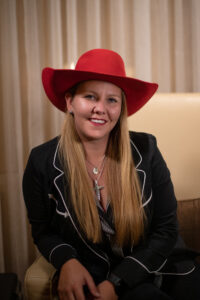
PRESIDENT, FOUNDER
MCFARLAND PRODUCTIONS
After freelancing her way through college, Natalie established McFarland Productions in 2014, which has continued to grow rapidly over the last few years. Her passion and focus have always remained the same; capturing, understanding, preserving and promoting Ranching, Farming, Western Lifestyle and AgriBusiness. She has always had a love for the western culture and even at a young age it was unmistakably clear she would someday find a career serving the industry.
Natalie grew up on a small ranch, rodeoed, showed horses in a variety of disciplines, showed livestock, and participated in 4H and Oregon High School Equestrian Teams. She has trained herding dogs and started colts, worked with sheep and cattle and has had the experience of racing to finish up a hayfield before a rainstorm hit. She understands the joys, sorrows, wins, losses and hard work of ranchers and farmers. That’s why McFarland Productions can produce authentic marketing campaigns for the businesses, organizations, events, and brands of the western and agriculture industry – it’s who she is.
With a passion for building community surrounding brands, Natalie focuses on building real connections between companies/brands and the people that make up their community. Telling the stories of your customers and making them apart of the brand’s story is her main focus. Creating real, human, meaningful connections and strengthening community within the western and agriculture industry through strategic marketing services.
SCOUT FOSTER
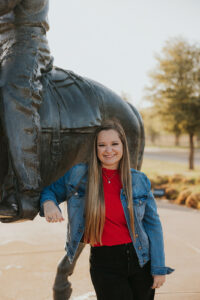
DIRECTOR OF STRATEGIC STORYTELLING
MCFARLAND PRODUCTIONS
Scout’s faithfulness to the agriculture and western sports industry is rooted in tradition. Growing up in Central Florida, she stood by her family as they supported different sectors of the industry, including raising beef cattle, bucking bulls for local rodeos, and spending weekends with her grandparents who lived on Disney’s Wilderness Preserve.
Moving away from The Mouse, Scout graduated Magna Cum Laude from the Nation’s top agricultural communications college at Texas Tech University in 2022.
Now residing in Crockett, she and her husband, Lane, keep busy raising beef cattle and bucking bulls with her family. Scout also loves gardening, raising chickens, reading, and her two dogs: Rue and Dill.